
Montana Chain Requirements on Mountain Passes: When a Trucking Company Is Liable for Not Chaining Up
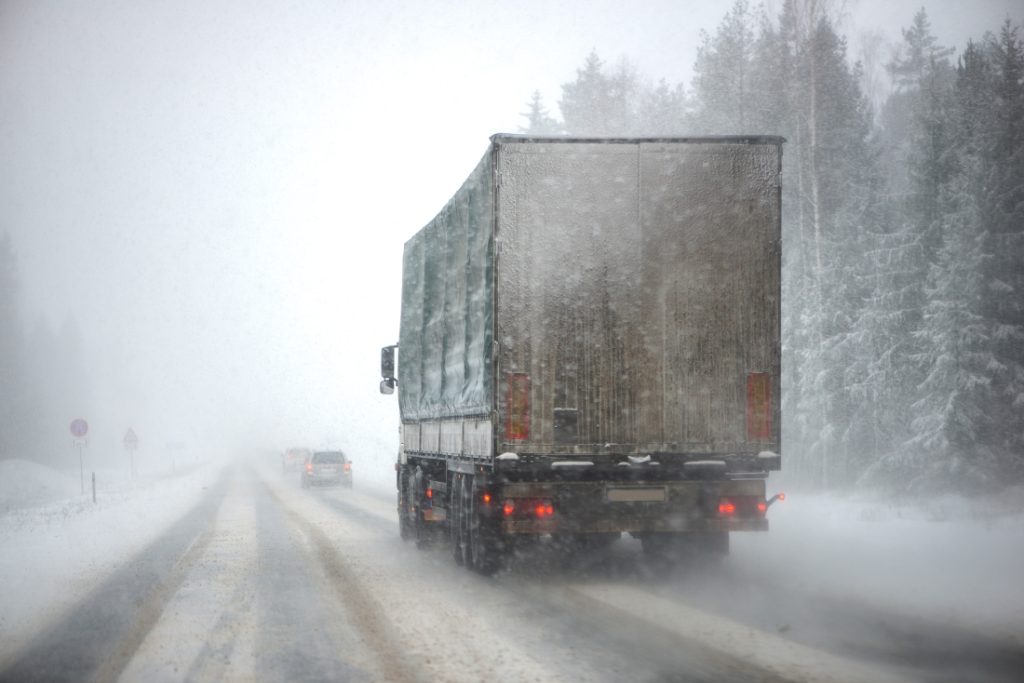 If a semi-truck without chains slid into your vehicle on a Montana mountain pass, the trucking company might be liable for your injuries. Montana law requires commercial vehicles to use tire chains when conditions demand it. However, sometimes trucking companies and drivers ignore these requirements, putting everyone on the road at risk. When chains are required and a truck crashes without them, that’s negligence, plain and simple.
Trucking companies know the rules. They know Montana’s mountain passes become dangerous in winter. Yet some still send drivers out without proper chains or fail to ensure drivers actually use them when required. If you’ve been hurt because a trucker didn’t chain up when they should have, you have legal options to recover compensation for your injuries, medical bills, and other losses.
If you’ve been injured in a crash involving an unchained semi-truck on a Montana mountain pass, contact Doubek, Pyfer & Storrar, PLLP at 406-442-7830. Our Montana truck accident attorneys will fight to hold negligent trucking companies accountable.
When Montana Law Requires Chains on Commercial Trucks
The Montana Department of Transportation determines when to require tire chains on Montana’s mountain passes. They base these requirements on weather conditions and road surfaces, and always with safety in mind. These requirements aren’t optional recommendations. Commercial truck drivers must use chains.
When weather conditions get worse, Montana typically requires chains on commercial trucks over 10,000 pounds on Montana roads like Interstate 90 over Homestake Pass, Lookout Pass, and other steep mountain grades.
The Montana Highway Patrol and MDT post chain law enforcement at these locations during winter storms. Electronic signs and highway alerts notify drivers when chain requirements go into effect.
Commercial drivers are expected to monitor road conditions and chain requirements before and during their trips. The MDT provides real-time road condition information online and through its 511 traveler information system. Truckers who fail to check these resources or ignore posted chain requirements violate state law and federal safety standards.
Why Chains Matter for Large Commercial Trucks
A fully loaded semi-truck can weigh 80,000 pounds. On steep, icy mountain grades, physics works against these massive vehicles. Tire chains provide the traction needed to climb hills safely and, more importantly, to control descent without sliding uncontrollably down a hill.
Without chains, trucks can lose traction on upgrades and slide backward into traffic. On downgrades, unchained trucks often can’t slow down adequately, leading to jackknifes, rollovers, and devastating collisions with vehicles ahead. The additional weight of commercial trucks means they need far more stopping distance than passenger cars, and ice multiplies this problem exponentially.
Chains aren’t perfect, but they dramatically improve a truck’s ability to maintain control in winter conditions. When used properly, they allow trucks to operate safely on mountain passes that would otherwise be impassable. When trucking companies skip this basic safety measure, they’re gambling with public safety to save time and money.
How Trucking Companies Violate Chain Requirements
Chain requirement violations don’t happen by accident. They happen because trucking companies make calculated choices.
Why would a truck company refuse to equip their drivers with proper chains for Montana’s mountain passes? Because quality tire chains cost money, cutting corners on safety equipment protects profit margins.
Other violations occur when companies pressure drivers to keep moving despite chain requirements. Drivers under tight delivery schedules may skip chaining up to save the 20 to 30 minutes it takes to install chains properly. Company dispatchers may encourage this behavior, either directly or by setting unrealistic delivery expectations that only work if drivers take shortcuts.
Some drivers carry chains but install them incorrectly or only on some of the required axles. Montana law specifies how many chains must be used and where they must be placed. Partial compliance still puts other motorists at risk and still constitutes a violation.
Federal regulations require trucking companies to provide drivers with necessary safety equipment and ensure it’s used properly. When companies fail this duty and crashes result, both the driver and the company can be held liable.
Real Consequences of Chain Law Violations
Crashes involving unchained trucks on Montana mountain passes often result in catastrophic injuries or death. A truck sliding out of control on Homestake Pass or Lookout Pass can collide with multiple vehicles, push cars off the road, or cause massive pileups that close the interstate for hours.
Victims suffer broken bones, traumatic brain injuries, spinal cord damage, and severe internal injuries, and in some cases death. Some crashes result in vehicles being crushed or pushed into guardrails or over embankments. The force of an 80,000-pound truck hitting a passenger vehicle at highway speed is devastating.
Beyond physical injuries, these crashes destroy lives financially. Medical bills pile up quickly. Victims miss work during recovery or become permanently disabled. Vehicles are totaled. Families lose income when a breadwinner is killed or seriously injured. Meanwhile, the trucking company that caused the crash often has millions in insurance coverage but fights hard to avoid paying what the victims deserve.
Why You Need a Montana Truck Accident Lawyer
Trucking companies and their insurers have legal teams that know how to minimize what they pay after a crash. They’ll start building their defense while you’re still in the hospital, and they’ll offer quick settlements that sound substantial but fall short of covering your actual losses.
These cases involve federal trucking regulations, state chain requirements, complex liability issues, and often multiple defendants. You need an attorney who understands truck accident law and isn’t intimidated by corporate legal teams.
Don’t wait until you’ve recovered to seek legal help. The trucking company and its insurer started protecting their interests immediately after the crash. You should, too.
The personal injury attorneys at Doubek, Pyfer & Storrar, PLLP know how to hold trucking companies accountable when their drivers violate Montana’s chain requirements. Call 406-442-7830 for a free consultation about your truck accident case. We don’t charge any fees unless we recover compensation for you.
