
Winter Car Accident Liability in Montana: Who Is Responsible When Snow or Black Ice Causes a Crash?
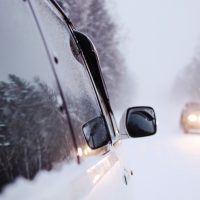
Snow and black ice do not cause crashes by themselves. Drivers do. Under Montana law, winter weather is rarely a valid excuse. Every driver has a duty to slow down and adjust to the road in front of them. So if another driver slid through an icy intersection and hit you, that driver can still be held responsible, even if they swear the road was too slick to stop.
Insurance companies know winter crashes feel like nobody’s fault. An adjuster may tell you the ice caused the wreck and deny your claim. You do not have to accept that answer.
At Doubek, Pyfer & Storrar, PLLP, our Montana car accident attorneys have helped injured Montanans hold careless drivers accountable since 1978. Call us at 406-442-7830 or fill out our confidential contact form to schedule a free consultation.
Does Montana Law Excuse Drivers for Crashes on Snow or Ice?
No. Montana’s basic speed rule requires every driver to use care and drive at a speed that makes sense for the traffic, visibility, weather, and road conditions. The posted speed limit is a ceiling, not a target. Driving the limit on I-15 through Wolf Creek Canyon may be fine in July and careless in January.
Montana courts have also closed a common loophole. Some states let drivers argue that a “sudden emergency,” like hitting a patch of ice, excuses their mistakes. In Simonson v. White, the Montana Supreme Court rejected the sudden emergency jury instruction in car crash cases. Juries judge winter drivers by the same standard of reasonable care as anyone else. In Montana, careful drivers plan for black ice.
How Common Are Winter Weather Crashes?
Very. According to the Federal Highway Administration, snowy, slushy, or icy pavement has caused more than 1,300 deaths and over 116,800 injuries each year across the country.
Around Helena, drivers know the risks well. MacDonald Pass on U.S. Highway 12 can go from wet to glazed in minutes. Many of these crashes happen because someone drove like the road was dry.
Who Can Be Held Responsible for a Winter Car Accident?
More than one party may share the blame. Depending on the facts, responsible parties can include:
- The other driver, for going too fast for conditions, following too closely, driving on bald tires, or failing to clear snow and frost from their windows.
- A trucking company, if a semi driver pushed through a storm to meet a deadline or ignored chain-up warnings. Truck crashes often involve federal safety rules and larger insurance policies.
- An employer, if the at-fault driver was on the job at the time of the crash.
- A government agency, in limited cases, such as when a known road hazard was left untreated.
Claims against the state, a county, or a city come with extra steps. Under the Montana Tort Claims Act, a written claim must be filed with the right agency before a lawsuit can move forward. Damage caps also apply, so these cases need careful handling from day one.
What If the Insurance Company Says I Was Partly at Fault?
The insurer may argue you should have stayed home, driven slower, or left more space. Even if you share some fault, you may still recover money. Montana follows a modified comparative negligence rule. You can recover damages as long as your share of fault is not greater than the fault of the people you are suing. Your award is then reduced by your percentage.
Here is how that works. Say your damages total $100,000 and a jury finds you 20 percent at fault. You would recover $80,000. At 51 percent, you would recover nothing. A car accident attorney can push back with evidence that shows what really happened.
What Evidence Matters After a Snow or Ice Crash?
Winter evidence disappears fast. Snow melts, ice gets sanded, and skid marks vanish. Helpful evidence includes photos of the road, the vehicles, and the other driver’s tires, along with weather reports, dashcam or security video, witness names, the police crash report, and vehicle “black box” data.
If a plow, sander, or commercial truck was involved, maintenance and driver logs may matter too. An experienced car accident lawyer can send letters demanding that this evidence be saved before it is lost.
Get medical care right away, even if you feel fine. Concussions and traumatic brain injuries can take days to show symptoms, and gaps in treatment give insurers another reason to doubt your claim.
How Long Do I Have to File a Winter Car Accident Claim?
In most Montana injury cases, you have three years from the date of the crash to file a lawsuit. Wrongful death claims and claims against government agencies can follow different rules. That time goes fast. A car accident attorney can track these deadlines so nothing slips through the cracks.
Talk With a Montana Car Accident Lawyer Before You Accept “No”
A slick road does not erase another driver’s duty to drive safely. If someone hit you this winter, their insurer may blame the weather, blame you, or both. A trusted car accident law firm can dig into the facts, and fight for the full value of your claim, including medical bills, lost wages, and pain and suffering.
Doubek, Pyfer & Storrar has served injured people as a Montana car accident law firm for more than 45 years. We have seen many of the excuses insurers use in winter crash cases, and we know how to challenge them with evidence.
Contact Our Montana Car Accident Law Firm
If you were hurt in a snow or ice crash anywhere in Montana, we are here to listen. At Doubek, Pyfer & Storrar, PLLP, our car accident attorneys have helped injured Montanans hold careless drivers accountable since 1978. Call us at 406-442-7830 or fill out our confidential contact form to schedule a free consultation.
Doubek, Pyfer & Storrar, PLLP | 307 N. Jackson Street, Helena, Montana 59601 | 406-442-7830.
