
Underride Collisions in Montana: Why Lighting, Conspicuity Tape, and Guards Matter (and Who Gets Sued)
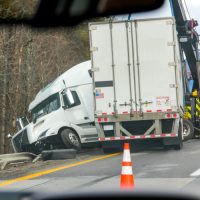
If a truck’s safety equipment had been working properly, would you or your loved one still have been hurt? That’s the question families ask us after underride crashes.
Federal law requires commercial trucks to have rear guards, reflective tape, and functioning lights specifically to prevent cars from sliding underneath trailers. When trucking companies fail to maintain this equipment, people get hurt or die in completely preventable crashes.
If you or someone you love was hurt in an underride crash in Montana, the trucking company may be legally responsible, especially if the truck was missing lights, reflective tape, or underride guards required by federal law.
When trucking companies skip maintenance or ignore regulations, they can be sued for the harm they cause.
At Doubek, Pyfer & Storrar, PLLP, our trucking accident lawyers have recovered millions for Montana families devastated by truck crashes. If faulty equipment played a role in your collision, we’ll investigate every detail and fight to hold the right parties accountable. Call our injury law firm at 406-442-7830 for a free case review.
What Is an Underride Collision?
An underride collision occurs when a smaller passenger vehicle slides underneath a large truck or trailer during a crash. The top of the car gets sheared off or crushed, often at windshield level.
Unlike typical rear-end collisions, underride crashes bypass your vehicle’s crumple zones and airbags. The truck’s trailer acts like a guillotine. Survivors often suffer traumatic brain injuries, spinal cord damage, or permanent disfigurement. Many victims don’t survive.
These crashes happen most often at night or in low visibility conditions. A truck without proper lighting or reflective tape becomes nearly invisible on dark Montana highways.
Federal Safety Requirements Trucking Companies Must Follow
To prevent these deadly accidents, the Federal Motor Carrier Safety Administration (FMCSA) and the National Highway Traffic Safety Administration (NHTSA) require specific safety equipment on commercial trucks and trailers:
- Rear Underride Guards: Trailers manufactured after 1998 must have rear impact guards (RUGs) that meet strict strength standards. These guards are designed to prevent cars from sliding underneath during rear-end collisions.
- Reflective Tape (Conspicuity Tape): Trailers must have red and white reflective tape along the sides and rear to make them visible at night. This requirement has been in effect since 1993.
- Lighting Requirements: Trucks must have functioning tail lights, brake lights, turn signals, and clearance lights. All lighting equipment must meet Department of Transportation (DOT)
When trucking companies fail to install, maintain, or replace this equipment, they violate federal regulations. That makes them liable when crashes happen.
Why These Safety Features Matter on Montana Roads
Montana has some of the deadliest roads in America. We have high speed limits, long stretches of unlit highway, and severe weather that reduces visibility. Rural two-lane roads mean more head-on exposure to commercial traffic.
A study by the Insurance Institute for Highway Safety (IIHS) found that side underride guards could save 10x as many lives as previously thought. Stronger rear guards could eliminate nearly all fatal rear underride crashes.
Reflective tape works better than you might think. Research shows reflective tape (also known as conspicuity tape) treatments reduce side and rear crashes by making trucks visible from greater distances. When that tape is faded, missing, or covered in road grime, it stops working.
Proper lighting matters even more after dark. If a truck’s tail lights are out and there’s no reflective tape, or running lights a driver on Highway 93 or Interstate 90 may not see the trailer until it’s too late to brake.
Who Gets Sued After an Underride Crash?
Multiple parties can be held liable:
- The trucking company
- The truck driver
- The leasing company
- The manufacturer
- Third-party maintenance contractors
Montana follows modified comparative negligence rules. Even if you were partially at fault, you can still recover damages as long as you’re less than 51% responsible. Insurance companies often try to shift blame to car drivers, but when a truck violates federal safety standards, liability shifts.
Your attorney will examine:
- Federal Motor Carrier Safety Regulations (FMCSR) compliance records
- Truck inspection and maintenance logs
- Violation history for that carrier
- Whether guards were installed and met strength requirements
- Condition of reflective tape and lighting at the time of the crash
- DOT inspection reports
Contact Our Montana Truck Accident Lawyers
If you were injured in an underride collision or lost a family member, time matters. Evidence disappears. Trucking companies have legal teams working immediately to limit their liability.
Don’t let them destroy maintenance records or blame you for a crash that safety equipment could have prevented. Contact an experienced Montana truck accident attorney who knows how to investigate these cases and prove regulatory violations.
If you’ve been hurt in a commercial truck crash, call 406-442-7830 or fill out our confidential contact form for a free case evaluation.
