
Was That Tire Blowout Really an Accident?
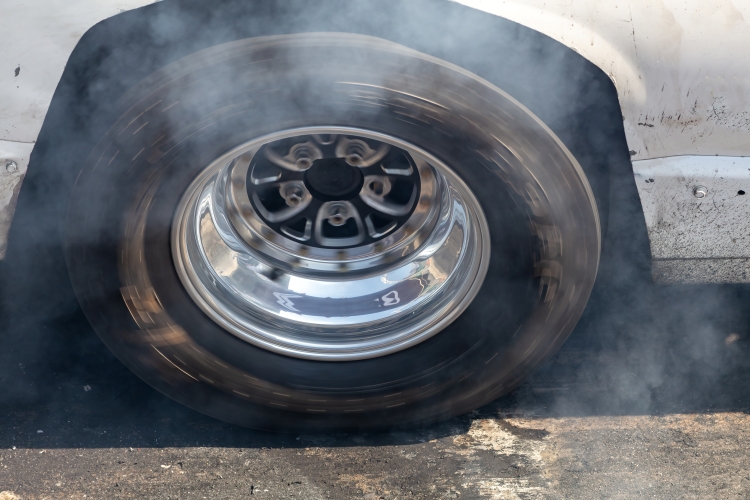 Sometimes a blowout is a freak event. But more often than people think, it was preventable. Worn tread, cracked sidewalls, tires kept on a vehicle years past their safe lifespan. When a tire fails because someone skipped maintenance or ignored a warning, that’s not bad luck. That’s negligence. And if it puts you in a crash, the person who let it happen may owe you.
Every tire failure leaves a paper trail. Maintenance records, inspection logs, purchase dates, and pre-trip reports can tell the whole story. Knowing where to look and what to ask for is what separates a dismissed claim from a real one.
At Doubek, Pyfer & Storrar, PLLP, we’ve know how to make sure all that information is preserved to discovery if maintenance records tell a different story from what the at-fault company wants you to think. If you were hurt in a blowout crash, our Montana truck accident lawyers can find out whether it was actually preventable.
Call us for a free consultation at 406-442-7830. We work on contingency. You pay nothing unless we win.
Why Tire Blowouts Aren’t Always Accidents
National Highway Traffic Safety Administration data fatal large truck crashes in 2022, shows that while only 1% of total fatal crashes involved tire-related issues, tires were a factor in nearly 28% of fatal crashes where a mechanical issue was present. This makes tire problems one of the most common mechanical issues in deadly outcomes, rising to almost 39% in single-vehicle fatal crashes with a vehicle-related factor. These figures emphasize that tire failures are a significant safety threat, accounting for more than a quarter of all vehicle-related (i.e. mechanical failures) factors in fatal crashes. Therefore, prioritizing tire maintenance and inspection is crucial for preventing catastrophic incidents and saving lives.
Tires don’t just blow out randomly. They fail because of specific, identifiable causes:
- Running on low pressure creates heat buildup. Heat breaks down the tire structure from the inside. It’s the leading cause of blowouts and one of the easiest things to prevent.
- Worn tread. Tread depth below 2/32 of an inch puts a tire at serious risk, especially at highway speeds or in wet conditions.
- Rubber deteriorates over time, even if a tire still looks fine. Most manufacturers consider tires unsafe after 6 years, regardless of mileage.
- Every tire has a load rating. Exceeding it stresses the tire beyond what it was designed to handle.
- Ignored damage. A prior impact, a sidewall bulge, a slow leak that was never fixed. These are red flags that get documented, or should be.
The Maintenance Record Is the Evidence
After a blowout crash, the physical evidence on the road fades fast. The tire itself is often destroyed. What survives is paper.
Maintenance records are the backbone of a preventable blowout case. They show what was done, what was skipped, what was flagged, and what was ignored. For private drivers, that might be service history from a dealership or auto shop. For commercial vehicles, it goes much deeper.
| Evidence Type | Why It Matters |
| Maintenance logs | Shows if tire rotations, inspections, and replacements were done on schedule |
| Tire age and date codes | Tires over 6 years old are considered a risk regardless of tread depth |
| Inspection records | Required for commercial vehicles; gaps in records suggest negligence |
| Purchase and replacement receipts | Documents when tires were last replaced and what was installed |
| Fleet inspection reports | For trucking companies, federal regulations require regular tire checks |
| Driver pre-trip reports | Commercial drivers must log tire condition before every trip |
| Repair shop records | Shows warnings or recommendations that were ignored |
These records don’t disappear on their own, but they can be destroyed or overwritten. Getting a preservation demand out quickly is critical. Once a lawsuit is filed or even threatened, defendants are required to stop destroying records. A Montana truck accident attorney can send that demand before a suit is ever filed.
Commercial Vehicles Carry a Higher Standard
If you were hit by a semi-truck, a delivery van, a bus, or any other commercial vehicle, the standards around tire maintenance are strict. Federal Motor Carrier Safety Administration (FMCSA) regulations require commercial drivers to inspect their tires before every trip and log the results. Carriers are required to maintain those records.
When a trucking company’s tire blows out and causes a crash, one of the first questions is whether those pre-trip inspections actually happened, and whether any deficiencies were reported and addressed. A gap in the log is a red flag. An entry that shows a concern was noted but never fixed is even worse.
Fleet operators also have tire replacement schedules they’re supposed to follow. When those schedules get pushed for cost reasons, and a tire fails as a result, the company’s liability becomes very clear.
When the Tire Manufacturer Is Responsible
Not every preventable blowout is about neglect. Sometimes a tire fails because it was defective when it left the factory.
Defective tire cases involve manufacturing flaws, design problems, or failures to warn about known risks. These are product liability claims. They’re different from negligence claims, but they can run alongside them. A tire can be both defectively made and improperly maintained.
The National Highway Traffic Safety Administration maintains a public database of tire recalls and defect investigations. Checking that database is part of investigating a blowout case properly.
How Our Montana Truck Crash Attorneys Can Help
Investigating a tire blowout case means getting records that parties don’t want to hand over. It means hiring tire failure analysts and accident reconstruction experts. It means sending preservation demands before evidence disappears and knowing which federal regulations were supposed to apply.
Insurance companies are quick to call a blowout an unforeseeable accident. An attorney’s job is to prove it wasn’t.
The team at Doubek, Pyfer & Storrar is well equipped to handle cases where the initial report said “tire failure” and the maintenance records said something entirely different. We know how to find the difference. And we know what it’s worth.
| Don’t Let “It Was Just a Blowout” Be the End of the Story.
If you or someone you love was hurt in a tire blowout crash, the cause may not be what it looks like on the surface. Contact Doubek, Pyfer & Storrar, PLLP for a free case evaluation at 406-442-7830. We investigate. We fight. You pay nothing unless we win. |
